WOWK12

Introduction to AI · Grades 6–8

Using AI is a starting point. Understanding it is the goal.

AI literacy means being able to use AI thoughtfully, question its output, and explain its role in your work. For middle school students, a concrete project can make those habits easier to practice. WOWK12 connects each habit to something students can change, test, or discuss.

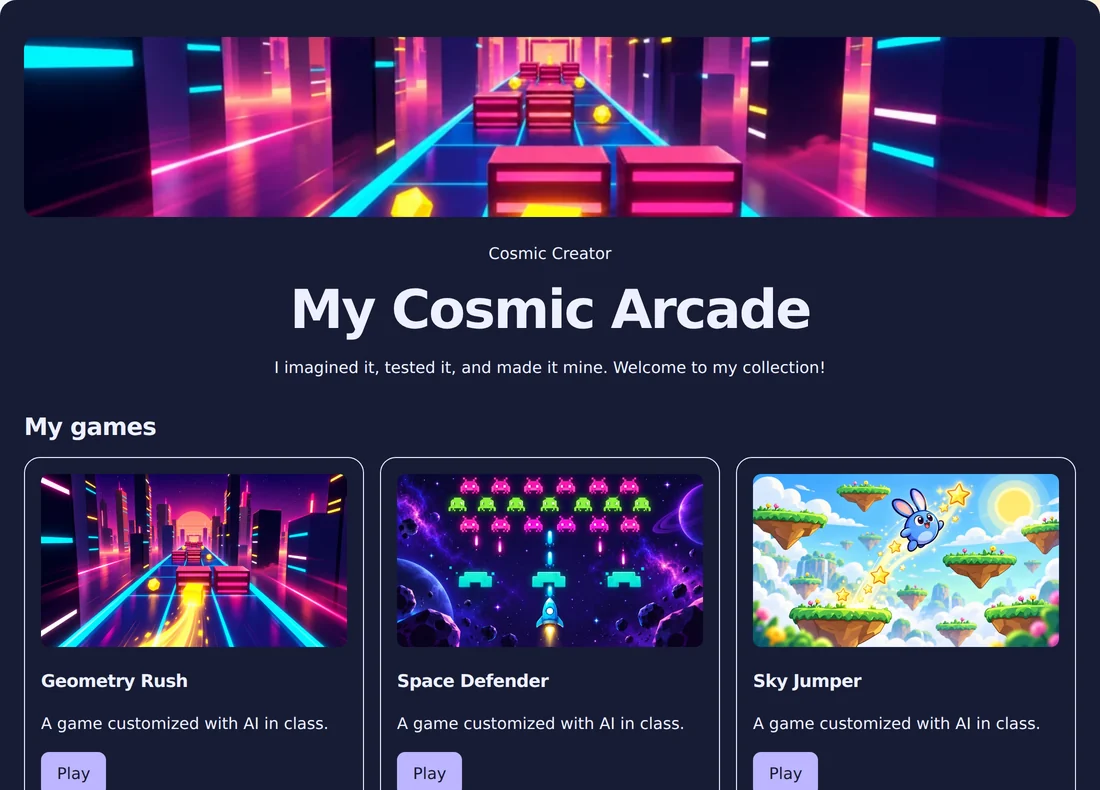
Sample finished student website with colorful game thumbnails and AI artwork
Illustrative sample project, not an actual student’s work.

Ask clearly, then check

A request such as ‘make it harder’ leaves room for interpretation. Students practice replacing it with a specific change, predicting the result, and checking what actually happens in a game. A fluent answer from AI is not evidence that an answer is correct; the course introduces mistakes and the need to verify.

Explore patterns without assuming understanding

Lessons investigate examples, prediction, context, and memory. Students compare fixed game rules with learned AI patterns and consider how the information available to a system shapes its response. These discussions help separate what a tool produces from what a learner can establish through observation.

Make responsible choices

Later projects ask students to investigate fairness, examine image sources, choose fictional nicknames, and explain creative credit. Privacy and attribution become decisions made during the work. Students practice saying what they contributed, what AI helped with, and what they tested.

Turn an activity into a discussion

After a project change, ask: What did you request? What did you expect? What happened? What would you change next? These questions make a useful bridge between an engaging activity and evidence of learning. WOWK12 uses games, AI artwork, and websites to give those conversations a shared starting point.

Before you begin

Questions from program leaders

Does AI literacy require coding experience?

Students can begin without prior coding experience. WOWK12 introduces AI ideas through prompts, supported project settings, observation, and discussion.

How is responsible AI use included?

Lessons include checking AI mistakes, investigating fairness and sources, protecting privacy, and explaining creative credit. School-managed access and adult oversight support the learning environment.

Let’s talk about your group.

Share your grade levels, calendar, and program goals. We’ll walk through the course and the next steps with you.